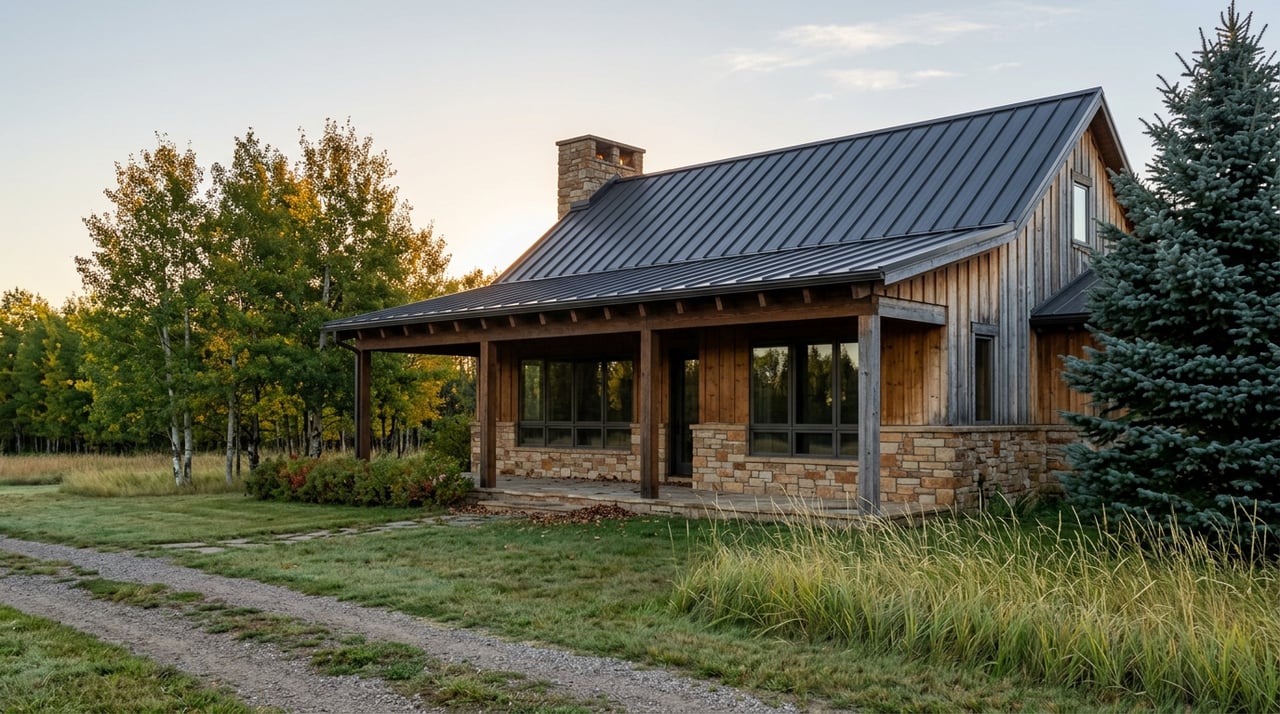
Drive the loop through Basalt and you hit a river walk. Drop into Carbondale and there's a Main Street with a marquee and a farmers market. Head north to Woody Creek and the whole week bends around a tavern with a screen door that's been swinging since before most residents were born. Missouri Heights has none of that. No commercial strip, no town square, no single building that functions as the place everyone eventually passes through.
What it has instead are gates. Actual ranch gates, at the end of long dirt driveways, that lead to working operations where the people who live up here go to buy eggs, board a horse, or spend an hour standing in a pasture with an alpaca. The mesa's social life doesn't run through storefronts. It runs through farms that decided, at some point, to let the neighbors in.
The Ranch That Doubles As Everyone's Front Porch
Cedar Ridge Ranch sits on 67 acres below Mount Sopris, and it has been a working piece of Missouri Heights for more than two decades, first as a horse boarding operation and now as something closer to a small agricultural neighborhood hub. As The Aspen Times reported, the Johnson family moved out from Chicago in 1999, bought the property, and spent years running it as a boarding barn before their daughter Merrill, who went on to compete three times at the American Quarter Horse World Show, came back from college to run the equestrian side full time.
Somewhere along the way the ranch opened its gate wider. There are now yurts, safari tents, a farmhouse and a cabin for guests who want to sleep on a working farm rather than just visit one. But the part that actually functions as a neighborhood fixture is the farm store and the daytime programming: farm tours, horseback riding lessons, fiber felting classes, and alpaca yoga led by Emilee Celeste, a Carbondale native who teaches the sessions out in the pasture with the ranch's resident herd. The animals on site now include Nigerian Dwarf goats, Zebu cattle, chickens, and a miniature horse named Gaston, alongside the alpacas the Johnsons added roughly seven years ago after researching the fleece market and deciding the animals were both low-maintenance and genuinely photogenic.
The farm store, open most days of the week, sells fresh eggs, pasture-raised pork and beef, and apparel and accessories made from the ranch's own alpaca fiber. It's the closest thing Missouri Heights has to a corner shop. You can find Cedar Ridge Ranch's full activity calendar here, and the operation has grown from a boarding barn into an agritourism destination without losing the working-ranch part of its identity.
Eggs From Down The Road
A few miles across the mesa, Spradley Farms runs a smaller, quieter version of the same idea. Owners Mike and Allison Spayd raise pastured poultry on their Missouri Heights property, sitting at roughly 7,200 feet, and sell eggs and meat directly to neighbors, local restaurants, and anyone willing to drive out to the farm itself. There's no retail storefront and no marketing push beyond word of mouth and a simple site. That's the point. On a mesa without a grocery store of its own, the egg supply comes from a family a few driveways over, not a shelf.
It's a small detail, but it says something about how Missouri Heights actually functions day to day. Commerce here is personal and direct because there isn't enough density to support anything else, and residents have made peace with that trade. You know the Spayds' name because you buy eggs from them, not because you read it on a sign.
The View Stays Open Because Someone Paid For It To
The reason Missouri Heights still looks like ranch country instead of a grid of five-acre lots isn't just zoning. Part of it is a private mechanism most residents never think about: the Lathrop Strang Memorial Fund, administered through the Aspen Valley Land Trust, which exists specifically to help cover the cost of donating a conservation easement on a working ranch. The fund was created in memory of Mike Strang after he passed in January 2014, and it has since helped conserve ranches stretching from Missouri Heights to Divide Creek, including Strang Ranch itself, described by the land trust as one of the last great working ranches on the mesa.
An easement doesn't put land in a park or open it to the public. It simply strips the development rights permanently, in exchange for a tax benefit, so the family that has worked the land for a generation or more can keep working it without the pressure to subdivide. That's a different kind of protection than a county zoning code, which can be amended by a future board of commissioners. An easement is recorded against the title and stays there regardless of who's in office. You can read more about how the Lathrop Strang Memorial Fund works through the Aspen Valley Land Trust.
The practical effect for anyone driving the mesa's back roads is that the open sightlines you're looking at, hay fields running toward Mount Sopris with nothing built on them, aren't accidental gaps waiting for a developer. In a lot of cases they're permanently off the table because of conservation easements.
Where The Mesa Ends And The Trail Begins
Missouri Heights sits above Carbondale, and Red Hill, the red-rock recreation area on the town's north side, ends up as the default trailhead for a lot of mesa residents on their way down to run errands. Managed by the Bureau of Land Management, it draws roughly 40,000 visits a year, heavy enough traffic that the parking lot off County Road 107 fills regularly and parking along the county road itself isn't allowed. The area is managed primarily for hiking and mountain biking, with views from the Mushroom Rock area stretching across both the Crystal River Valley and the Roaring Fork Valley.
The trail network is more varied than its size suggests, with loops short enough for a lunch break and others long enough to fill a morning:
- Blue Ribbon Trail, 1.2 miles
- Bogus Trail, 1 mile
- Elk Traverse Trail, 1.6 miles, closed seasonally December 1 through April 15
- Faerie Trail, 1.6 miles
- Mushroom Rock Trail, 0.6 miles
- Northside Loop Trail, 3.4 miles, seasonal closure
- Outer Loop Trail, 0.6 miles, seasonal closure
- Roller Coaster Trail, 0.3 miles
- Sage Loop Trail, 0.8 miles, seasonal closure
- Skeeter's Ridge Trail, 0.7 miles
- Three Gulch Trail, 1.2 miles
- Three Poles Trail, 0.2 miles
The seasonal closures on several of the longer loops protect winter range for wildlife, which means the trail system actually opens up as the mesa above it does the same in spring. Full trail details are on the BLM's Red Hill page.
A Saturday That Doesn't Need A Main Street
String it together and a weekend on Missouri Heights looks nothing like a weekend in a town with a commercial core. Morning might start with a farm tour or an alpaca yoga session at Cedar Ridge Ranch, followed by a stop for eggs from the Spayds if you're low. Afternoon could mean a drive along the back roads past Strang Ranch, taking in fields that will look exactly the same in twenty years because a conservation easement already decided that. By early evening you're down at Red Hill, catching one of the shorter loops before the light goes, with Mount Sopris turning orange behind you.
None of it happens in a place built for foot traffic or window shopping. It happens on working land, at gates that happen to be open. That's not a lesser version of a town center. It's just a different kind of one, built around working ranches and protected in part by conservation easements, with ways for neighbors to come in without giving up the work itself.
If you're already living up here, none of this is news exactly, but it's worth saying out loud once in a while: the reason Missouri Heights still feels like this is that a handful of people made deliberate choices to keep it that way. For those thinking about what it would take to become one of those neighbors, or to understand what a property on the mesa is actually worth given how little of it changes hands, Corey Crocker Real Estate has spent years tracking exactly that. Reach out for a confidential conversation about the market up here whenever you're ready.
This article is general information, not legal, tax or financial advice. Consult a qualified professional about your situation.