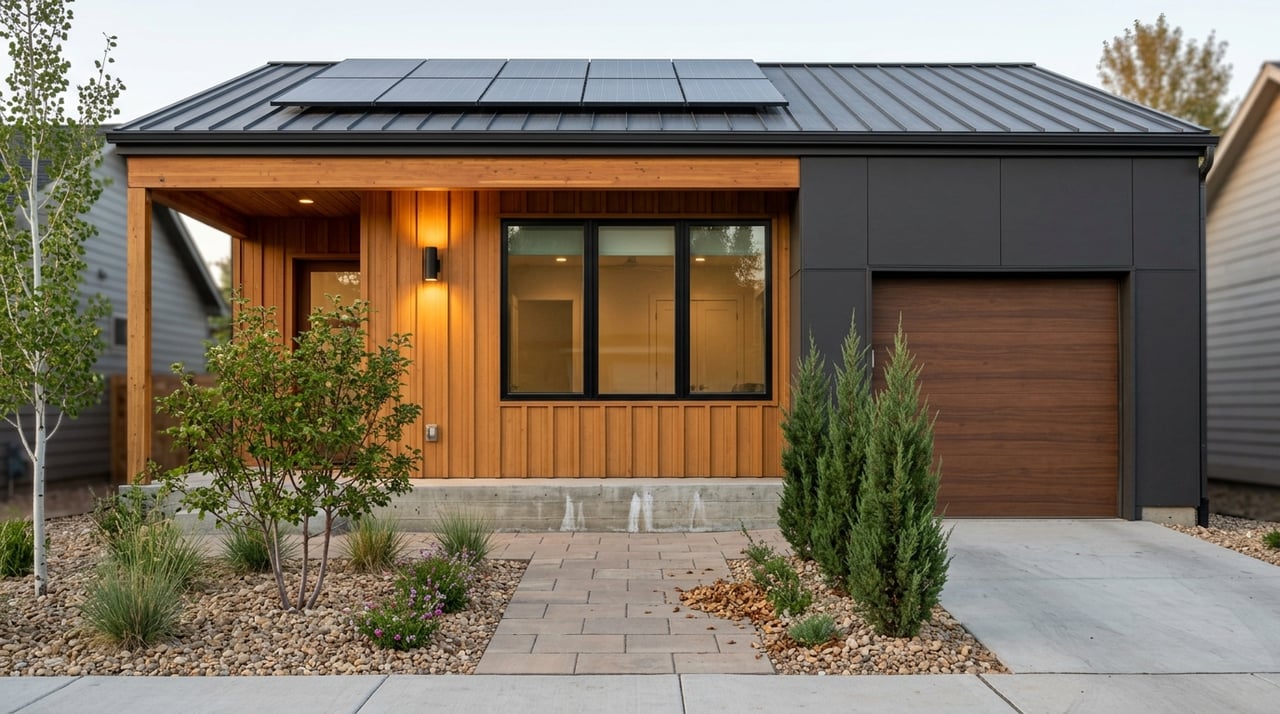
If you are looking at new construction in Carbondale, you are shopping in a market where supply can be limited and the details matter. A brand-new home can offer modern finishes, energy features, and less immediate maintenance, but the path from contract to closing is often more complex than it looks. When you understand where new construction is happening, how local approvals work, and what can affect timing and cost, you can make better decisions with fewer surprises. Let’s dive in.
Where new construction is happening
New construction in Carbondale is not typically a story of large-scale expansion. The town’s 2022 comprehensive plan uses an urban growth boundary and annexation framework that encourages denser, more urban development rather than broad outward growth.
That matters because many opportunities are tied to infill sites, mixed-use settings, or the later phases of existing neighborhoods. The same plan noted that roughly 140 to 145 parcels in River Valley Ranch had been platted and remained vacant while buildout continued, which gives you a sense of how much local inventory may come from subdivision completion rather than entirely new tracts.
Outside town limits, some new opportunities are appearing through planned developments in unincorporated Garfield County. Recent county actions near Carbondale include approval of McClure River Ranch for 12 residential lots and open space, along with public review activity tied to Spring Valley Ranch. In practice, that means new construction supply around Carbondale is often project-specific and shaped by subdivision or PUD approvals.
Why parcel location matters
One of the first questions to ask is simple: is the property inside the Town of Carbondale or in unincorporated Garfield County? That single detail can affect zoning rules, approval paths, permit requirements, and how quickly a project can move.
Within town limits, Carbondale’s Unified Development Code, known as Title 17, guides development review. The code is designed to support safety from fire and flood while also promoting energy conservation, solar energy, and environmentally sensitive development.
If you are buying in a planned unit development, the answer can be less straightforward. Town materials note that some PUDs may or may not be regulated by the UDC depending on the language of that specific PUD, and private covenants can add another layer. Two homes that appear similar on a map can come with very different rules.
What the approval process can look like
Buyers often assume that a nearly finished home is close to move-in. In reality, approvals and final signoffs can still affect the timeline late in the process.
Carbondale permit materials show that separate permits are required for building, electrical, plumbing, and mechanical work. The town also notes that use tax is collected before permit issuance, and some subdivisions may require HOA approval as part of the process.
For projects that need land-use review, the town requires a pre-application meeting and a detailed site plan. That plan can include building placement, parking, trash areas, driveways, circulation, sidewalks, fences, open space, utilities, and easements.
Town inspection materials also show that final planning approval and final building approval are part of the path to a Certificate of Occupancy, along with any outstanding fees and recorded documents when applicable. For you as a buyer, that means closing and move-in dates can shift even when the home appears substantially complete.
Why timing can change
Permit timing is not always linear. Carbondale’s permit documents warn that a permit can become null and void if work does not begin within 180 days, or if work is suspended or abandoned for 180 days.
That does not mean delays are common on every project, but it does show why builder communication matters. If you are buying before completion, it is wise to ask for a realistic timeline, what approvals remain outstanding, and what could still push back delivery.
This is especially important if you are coordinating a move, a school-year transition, a lease ending, or a second-home setup schedule. A little extra planning room can make the process much less stressful.
ADUs and flexible-use questions
If you are considering a new or newer home with an accessory dwelling unit, or the option to add one later, local rules deserve careful review. In Carbondale, attached or detached ADUs are allowed in some districts, but the rules vary by zone and sometimes by PUD language.
The town’s code limits an ADU to one bedroom, and separate town water or sewer service is not provided for the ADU. Town guidance also notes that a single-family home with an ADU requires minor site plan review, and noticed review can add about three to four weeks. In some zones, a conditional or special use permit may also be required.
This is a good example of why new construction is rarely one-size-fits-all in Carbondale. If future flexibility is part of your purchase decision, confirm the exact rules tied to that parcel before you commit.
Energy standards and performance
Energy efficiency is often a major reason buyers prefer new construction. In the Carbondale area, there is code structure behind those features, especially on county-side properties.
Garfield County’s current codes include the 2018 International Energy Conservation Code and the 2015 International Building Code. The county has also stated that blower-door testing is required on all new homes, which means energy performance is tied to actual compliance steps, not just marketing language.
For you, this can translate into a home that may feel tighter, more comfortable, and potentially more predictable in day-to-day operation. It is still worth asking the builder what specific materials, insulation, systems, and testing results apply to the home you are considering.
Rural lots bring extra site questions
If you are looking outside town in a more rural setting, sitework can become a major part of the purchase. New construction on county-side lots may involve septic planning, utility coordination, and property-specific engineering that you would not see in a more established in-town subdivision.
Garfield County’s environmental health department says all new, repaired, and altered wastewater treatment systems must follow current OWTS regulations. The county also says permit applications require a site and soil evaluation, system design, and site plan.
That means wastewater feasibility should be confirmed early if you are buying land or pursuing a semi-custom build. This is one of those behind-the-scenes issues that can affect cost, design, and schedule in a meaningful way.
Wildfire code changes to know
Wildfire resilience is becoming a more visible part of new construction in Garfield County. The county has said it is adopting the Colorado Wildfire Resiliency Code effective July 1, 2026, and permits submitted after that date must comply.
According to the county, the code uses wildfire classification ratings and requires structure hardening and defensible space in applicable areas. If you are comparing future builds or buying a home that will be permitted after that date, this could affect materials, design choices, timelines, and costs.
It may also shape how you evaluate a property long term. Asking how a builder is preparing for these standards can give you a clearer picture of what is included and what may still change.
Financing works differently than resale
Buying new construction often means making decisions before the home is finished. Financing can be part of that difference.
Construction loans are typically short-term and fund the build in stages. Some convert to a conventional mortgage when construction is complete, while others require a new application at the end of the build.
Builders may also ask for an upfront deposit when the home is not yet completed. If you are buying pre-completion, it is smart to review financing terms carefully and understand how the contract handles inspection and financing contingencies.
Taxes may rise after completion
One item buyers sometimes overlook is property tax timing. The taxes you see on a vacant lot or partially improved parcel may not reflect what you will pay once the home is completed and assessed.
Garfield County’s assessor states that the county reappraises every two years, sends notices in May, allows protests in the first part of June, and applies the new value in the following tax cycle. Colorado also has a separate process for valuing new construction during the year it is built.
The practical takeaway is simple: do not assume current taxes will stay the same after completion. If you are budgeting for a primary home, second home, or investment property, make sure your long-term carrying costs are based on the completed home, not just the land.
Smart questions to ask before you buy
Because new construction in Carbondale is often limited and highly parcel-specific, a few focused questions can help you avoid costly assumptions.
Ask about:
- Whether the property is in town or in unincorporated Garfield County
- The exact subdivision, PUD, or covenant rules that apply
- Which permits and approvals are still pending
- Whether HOA approval is required for any part of the project
- What remains before Certificate of Occupancy
- Utility status, including water, sewer, or OWTS requirements
- Energy code compliance and testing details
- Whether upcoming wildfire code changes could affect the build
- How taxes may change after completion
What this means for buyers in Carbondale
In Carbondale, new construction can be a great option, but it usually rewards buyers who look beyond finishes and floor plans. Supply is relatively scarce, and the process is shaped by local code, PUD language, utility status, and permit timing.
That is why local guidance matters. When you understand the differences between in-town infill, subdivision buildout, and county-side development, you can compare opportunities more clearly and move forward with confidence.
If you are considering new construction in Carbondale or nearby mid-valley communities, working with a local advisor can help you sort through the details, identify better-fit opportunities, and ask the right questions before you commit. When you are ready for a tailored, high-touch approach, connect with Corey Crocker.
FAQs
What should buyers know about new construction supply in Carbondale?
- New construction in Carbondale is relatively limited and often comes from infill development, later phases of existing neighborhoods like River Valley Ranch, or specific county-side planned developments rather than large new tracts.
What should buyers know about Carbondale zoning and PUD rules?
- Buyers should know that rules can vary significantly depending on whether a property is inside town limits or in unincorporated Garfield County, and PUD language or private covenants may change what is allowed.
What should buyers know about Carbondale permit timing?
- Buyers should know that separate permits may be required for different parts of construction, and final approvals are still needed before a Certificate of Occupancy is issued, which can affect closing and move-in timing.
What should buyers know about ADUs in Carbondale new construction?
- Buyers should know that ADU rules depend on the zone district and sometimes the PUD, that ADUs are limited to one bedroom under town rules, and that review timelines can add several weeks.
What should buyers know about rural lots near Carbondale?
- Buyers should know that county-side lots may require early review of septic or OWTS feasibility, site and soil evaluations, and other property-specific approvals that can affect cost and design.
What should buyers know about property taxes on a new build in Garfield County?
- Buyers should know that taxes can increase after a home is completed and assessed, so land-only or pre-completion tax amounts should not be treated as the long-term tax picture.