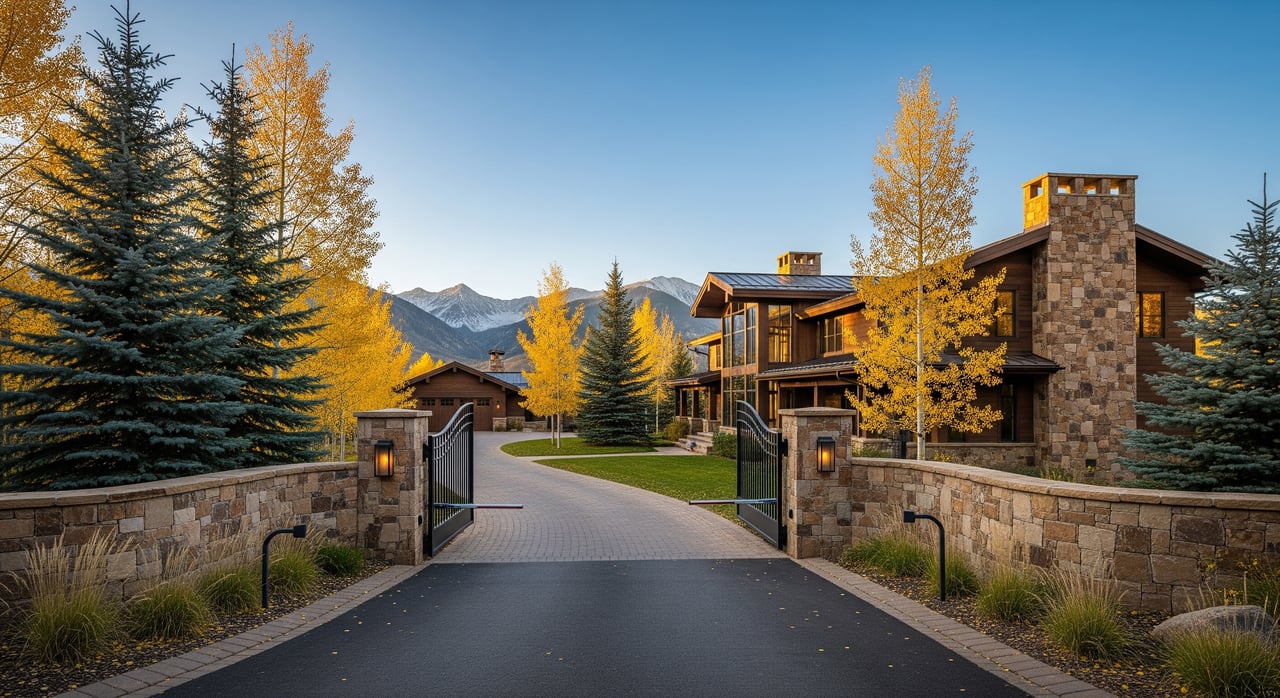
Thinking about the privacy and calm a gated community can offer, but not sure if it fits your life in Aspen Glen? You want a place that feels secure and well maintained, without surprise costs or restrictive rules you will regret later. In this guide, you will learn how gated living works, the trade-offs that matter in a Colorado mountain setting, and a practical checklist to verify details in Aspen Glen before you buy or sell. Let’s dive in.
Gated living, defined simply
A gated community controls physical access with a gate, keypad, remote entry, or staffed guard to limit through-traffic. Most are managed by a homeowners association that enforces CC&Rs, collects dues, and maintains common areas. Some are small enclaves with a single gate, while others are larger developments with amenities and more robust security services.
In Aspen Glen, the exact boundaries, ownership of roads, and gate operations can vary. You should confirm whether the area you are considering is formally gated, how access works, and who manages it by reviewing county and HOA records. A quick check of recorded plats and CC&Rs will clarify what you are actually buying.
Key pros in a mountain setting
- Privacy and quiet. Limited access reduces casual traffic, which can make streets feel calmer and more private.
- Perceived security. Gates can deter opportunistic theft and reduce drive-through activity. They are one layer in a broader safety plan.
- Community standards. CC&Rs and architectural rules can protect neighborhood character, which may help preserve property values.
- Consolidated services. Private road upkeep, snow removal, and any on-site amenities are typically coordinated by the HOA, which can be convenient during winter.
Trade-offs to weigh carefully
- Higher HOA costs. Gates, security, private roads, and reserves usually mean higher dues than non-gated areas.
- More restrictions. CC&Rs may limit exterior changes, rental options, or how you use the property.
- Guest and vendor access. Deliveries, visitors, and contractors face an extra step at the gate unless procedures are smooth.
- Maintenance risk. Mechanical gates and private roads require upkeep. If reserves are low, special assessments are possible.
- Resale audience. Some buyers prefer fewer rules or lower dues, which can narrow the pool when you sell.
Costs, insurance, and lending basics
HOA fees often fund gate operations, security contracts, private roads, snow removal, landscaping, utilities for common areas, insurance on common elements, management, and reserves. Ask for the current budget, recent financials, and a reserve study to see how well future repairs are planned.
Insurance in a gated community still depends on construction type, local wildfire exposure, and replacement cost. The HOA’s master policy covers common areas and, in some cases, exterior elements. You will still need a homeowners policy for your structure and belongings. Confirm whether the master policy includes liability for gate operations and whether any endorsements are required.
Lenders review HOA financial health during underwriting. If you are buying a condo, the project’s approval status matters for some loan types. For single-family homes in a gated subdivision, lenders may ask for documentation that shows recorded access easements and emergency access procedures.
Resale and marketability in Aspen Glen
Buyer preferences for gated living vary across Garfield County. Some will pay a premium for privacy and a managed environment, while others prefer fewer rules and lower carrying costs. In a resort-adjacent market, seasonality and snow removal performance can influence value and time on market.
Before you buy or list, compare recent sales in Aspen Glen with similar non-gated neighborhoods nearby. Look at price per square foot, days on market, and the ratio of sale price to list price. If rentals are allowed, review long-term and short-term rental demand, since rental flexibility can influence pricing and absorption.
Due diligence checklist for Aspen Glen
Start with documents you can verify locally. This reduces surprises and helps you negotiate clearly.
Must-have documents
- Recorded plat and full legal description.
- HOA CC&Rs, bylaws, rules, architectural guidelines, and articles of incorporation.
- Current budget, 2–3 years of financial statements, reserve study or plan, and history of special assessments.
- Board meeting minutes for the past 12–24 months.
- Management contract and any gate or security vendor contracts.
- HOA insurance certificates and declarations page.
- Resale or estoppel certificate showing dues, delinquencies, and pending assessments.
- Title report and seller disclosures.
Operational and site checks
- Gate system reliability, backup power, access methods, and maintenance history.
- Road ownership and maintenance responsibility, including snow removal plans and budgets.
- Emergency access procedures and written agreements with fire and EMS.
- Delivery and service access for mail, packages, trash, and utilities.
- Internet and cell coverage options in your exact location.
- Wildfire risk and defensible-space rules that may affect landscaping or insurance.
Questions to ask the HOA
- What are the current assessments and exactly what do they cover?
- Is there a recent reserve study and what percentage of reserves is funded?
- Have there been special assessments in the past five years, and are any planned?
- Who owns and maintains the roads and gates, and what easements are recorded?
- What security measures exist and are incident reports available for review?
- Are rentals allowed, and if so, what restrictions apply to short-term or long-term leases?
- How does the architectural review process work and how long do approvals take?
- Are there any pending lawsuits or insurance claims involving the HOA?
Buyer tips to stay in control
- Request the full HOA document set early and read it carefully. Focus on rules that affect how you live, like exterior changes, pets, and rentals.
- Model your total monthly cost by adding dues to mortgage, taxes, insurance, and typical utilities. Include a cushion for potential assessments.
- Verify gate reliability, snow removal performance, and emergency access, especially if you plan to be here part-time or during winter.
- Obtain local insurance quotes that reflect wildfire exposure and construction details before you waive contingencies.
Seller tips to boost confidence and price
- Gather the full HOA package for buyers, including the resale certificate and a clean summary of dues, what they cover, and any pending projects.
- Disclose known maintenance items and any past or planned special assessments. Transparency builds trust and smooths negotiations.
- Coordinate showing access, visitor passes, and delivery instructions so the gate does not deter buyers.
- If allowed, highlight recent road or gate upgrades, reserve strength, and consistent snow removal as value drivers.
How to confirm details locally
Colorado’s HOA rules fall under the Colorado Common Interest Ownership Act. To verify Aspen Glen specifics, check the Garfield County Assessor and GIS for parcel and road data, and the Clerk and Recorder for plats, CC&Rs, and easements. The HOA or its manager should provide budgets, reserves, and meeting minutes. For public-safety context, contact local law enforcement and fire districts about emergency access and any gate protocols.
Your next step
If gated living fits your lifestyle, a careful document review and a clear picture of costs will help you buy with confidence. If you are selling, preparing the right disclosures and simplifying access can widen your audience and protect your price. When you are ready to compare options, tour properties, and stress-test the HOA’s numbers, reach out for guidance.
Ready to talk through Aspen Glen’s gated options and align them with your goals? Connect with Corey Crocker for patient, local advice and a discreet, full-service approach.
FAQs
Are HOA fees higher in Aspen Glen gated areas?
- Typically yes. Gate operations, private roads, and reserves add costs, so dues are often higher than in comparable non-gated neighborhoods.
Do gates make homes safer from crime?
- Gates can deter casual through-traffic and opportunistic theft, but they are only one layer of safety. Review local incident data and HOA security measures.
Will a gate lower my insurance premium?
- It might, but not always. Wildfire risk, construction type, and replacement cost often drive premiums more than gated access.
Can I do short-term rentals in Aspen Glen?
- It depends on the HOA’s CC&Rs and rules. Confirm whether short-term or long-term rentals are allowed and what restrictions apply.
What should I check before buying in a gated community?
- Review the full HOA document set, financials and reserves, maintenance history for gates and roads, emergency access plans, and recorded easements.