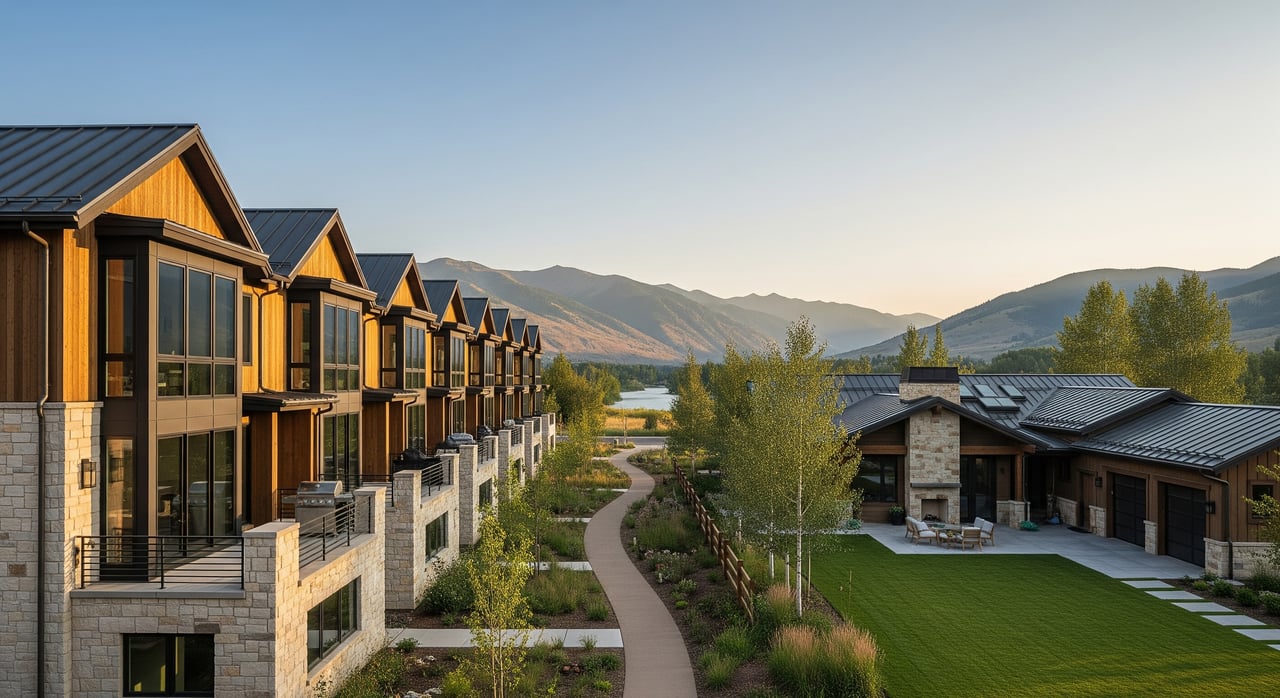
Trying to decide between a townhome and a single-family home in River Valley Ranch? You’re not alone. Buyers here often weigh convenience against space, and community amenities against long-term flexibility. In this guide, you’ll learn how each option stacks up on costs, lifestyle, maintenance, and resale so you can choose with confidence. Let’s dive in.
River Valley Ranch context
River Valley Ranch is a planned community in Garfield County that blends neighborhood living with mountain-town access. Inventory and pricing can shift with season and demand, and different product types may move at different speeds. Because numbers change, work from a recent MLS snapshot for accurate comparisons when you are ready to make an offer.
Focus first on how you plan to use the home. Full-time living, a part-time base, or an investment each comes with different tradeoffs on maintenance, HOA rules, and carrying costs.
Townhome basics in RVR
Townhomes can offer a lower entry point than many single-family homes in similar locations. They also reduce day-to-day upkeep, which appeals to owners who want lock-and-leave ease.
Townhome pros
- Lower typical purchase price compared with many single-family options in the same community.
- Predictable monthly costs if the HOA covers exterior care, landscaping, and snow removal.
- Often near community features, which can add convenience for daily routines.
Townhome cons
- Monthly HOA fees can be significant and vary by sub-association.
- Rules may limit exterior changes, vehicle storage, pets, or rentals.
- Shared walls mean less privacy and potential for noise transfer.
- Some lenders require project approvals that can affect loan options and timing.
Townhome monthly costs to plan
- HOA assessments and any master plus sub-HOA fees.
- Interior insurance if a master policy covers exteriors; confirm coverage details.
- Utilities not included in HOA, plus trash or internet if not bundled.
- Routine interior maintenance and any limited common element obligations.
Single-family basics in RVR
Single-family homes provide more private outdoor space and flexibility for future changes, subject to HOA guidelines. They can be a strong fit if you value autonomy and room to spread out.
Single-family pros
- More yard and separation from neighbors for privacy and outdoor use.
- Greater control over exterior appearance and potential for expansion, within CC&R limits.
- Strong appeal for owners who want storage, hobbies, or garden space.
Single-family cons
- Higher typical purchase price compared with many townhomes.
- You handle exterior maintenance, landscaping, and snow removal.
- Insurance, utilities, and property taxes can be higher depending on size and lot.
Single-family monthly costs to plan
- Full-property insurance and any required hazard add-ons based on location.
- All utilities and services, including landscape and snow management.
- HOA dues if applicable, plus any amenity or club fees.
- Ongoing upkeep for roofs, siding, driveways, and yard systems.
Ownership costs: key differences
Every home is unique, but these categories usually drive the gap between townhome and single-family carrying costs in River Valley Ranch.
- HOA and rules: Many townhomes have a master HOA plus a sub-HOA, which can increase monthly dues but reduce maintenance responsibilities. Single-family homes may pay only a master HOA and handle their own exterior work. Always review CC&Rs, Rules and Regulations, and the current budget or reserve study.
- Property taxes: Taxes vary by assessed value and property characteristics. Ask for the most recent tax bill when you review disclosures.
- Utilities: Confirm whether homes are on municipal water and sewer or private systems, and what services are included in HOA fees. Clarify who pays for snow removal, road maintenance, and trash.
- Insurance: Townhome owners may insure interiors if a master policy covers exteriors. Single-family owners typically carry full-structure policies. In certain areas, wildfire or flood endorsements may be relevant.
- Maintenance: Townhomes often centralize exterior work, which can smooth costs over time. Single-family homes require budgeting for roofing, siding, landscaping, driveways, and snow equipment or services.
Lifestyle tradeoffs
Choosing between a townhome and a single-family home often comes down to daily rhythm and the features you value.
- Space and privacy: Single-family homes deliver more yard and separation. Townhomes concentrate living space and reduce outdoor upkeep.
- Convenience: Townhomes can offer a low-maintenance lifestyle ideal for frequent travelers or part-time residents. Single-family homes offer control if you enjoy projects, gardening, or entertaining outdoors.
- Community features: If access includes amenities like a golf course, clubhouse, pools, trails, and parks, consider how close the home is and what fees apply. Proximity can enhance your use of the facilities.
- Access and commuting: Consider your routes to nearby services and regional travel corridors. Townhome clusters may be near central neighborhood roads, while single-family homes can vary more by lot location.
Resale and rental outlook
Resale depends on supply, condition, views, and how well a home matches current buyer preferences. In many planned communities, well-kept townhomes attract buyers seeking simplicity and predictable carrying costs, while updated single-family homes draw interest from those who prioritize space and privacy.
If you are considering rentals, review the HOA’s rental policy and county rules. Some communities restrict short-term rentals, require minimum lease lengths, or apply registration and tax obligations. Policies change, so confirm at the time you plan to rent.
Financing and inspections to plan
Financing can differ by property type. Some townhome projects require lender approvals that can affect your loan options and timetable. If you are using FHA or certain conventional programs, confirm the project’s status early.
Inspection focus areas also vary:
- Townhomes: Shared walls and fire separation, soundproofing, roofing and exterior maintenance scope under the HOA, drainage across common areas, and party wall agreements.
- Single-family homes: Lot drainage, retaining walls, roof and siding condition, driveway wear, and any private utility systems. Verify irrigation, outbuildings, and yard structures.
Site risks and local regulations
River proximity and mountain geography can introduce specific risks. Build these checks into your due diligence.
- Floodplain: Confirm any flood zone exposure and whether flood insurance is recommended or required.
- Wildfire: Understand the property’s wildfire risk and any defensible space requirements in the CC&Rs.
- Utilities and roads: Verify if roads are public or private, who handles winter plowing, and the cost-sharing method.
- Zoning and future development: Ask about nearby planned projects that could influence views, traffic, or neighborhood density over time.
Buyer and seller checklists
Use these quick lists to streamline your process.
For buyers
- Request a current MLS snapshot for townhomes and single-family homes in River Valley Ranch when you are ready to write offers.
- Review CC&Rs, bylaws, and rules. Note rental policies, exterior change guidelines, and pet policies.
- Get the latest HOA budget, reserves, and any special assessment history.
- Ask for the most recent property tax bill and utility averages.
- Confirm insurance needs, including any wildfire or flood considerations.
- Schedule inspections tailored to the property type and location.
For sellers
- Gather HOA documents, fee schedules, rules, and any recent notices.
- Provide a clean summary of recent improvements and service records.
- Pre-order a sewer scope or roof evaluation if condition is uncertain.
- Clarify rental history and any permits or registrations if applicable.
- Price with a fresh MLS comp set that separates townhomes and single-family data.
Which one fits you
If you want ease and predictable costs, a townhome’s HOA coverage and smaller footprint can be a smart fit. If you want privacy, outdoor space, and flexibility over time, a single-family home can be worth the higher acquisition and upkeep.
The right move aligns with your budget, maintenance tolerance, and how you plan to use the home over the next 3 to 10 years. A side-by-side analysis of current listings and recent sales will make the choice clear.
Ready to compare live options and numbers in River Valley Ranch? Reach out to Corey Crocker for a private tour plan, current HOA and resale insights, and a clear strategy tailored to your goals.
FAQs
What is generally more affordable in River Valley Ranch, a townhome or a single-family home?
- In many planned communities, townhomes offer a lower entry point, but you should verify with a current MLS snapshot for River Valley Ranch before deciding.
How do HOA fees impact monthly costs for townhomes vs single-family homes?
- Townhomes often include exterior care, landscaping, and snow removal in HOA dues, while single-family homes may pay lower dues and handle their own maintenance; compare total monthly outlay.
Are short-term rentals allowed in River Valley Ranch?
- Policies vary by HOA and can change; review CC&Rs and any county rules for lease length, registration, and taxes before planning short-term or long-term rentals.
What inspections differ for townhomes compared to single-family homes?
- Townhomes call for attention to shared walls, fire separation, roofing under HOA maintenance, and drainage across common areas; single-family homes need a closer look at lot drainage, exterior systems, and yard structures.
Do flood or wildfire risks affect ownership type differently?
- Risk depends on the specific lot, not just the property type; check flood maps, wildfire guidance, and CC&R requirements for defensible space or insurance considerations.
What lending issues should I expect with a townhome purchase?
- Some townhome projects require lender approvals that influence loan options and timing; confirm project status with your lender early in the process.